Expanding Capacity and Reducing Emissions
How Dirt Hugger Is Building Carbon-Negative Growth
Here at Dirt Hugger, growth has never been about getting bigger just for the sake of it. It’s about doing more good and getting a better, more intentional result; for our communities, our climate, and the future of composting in the Pacific Northwest. After three years in the making, we are ecstatic to share that our latest infrastructure upgrade marks a major milestone in that mission.
A Regional Investment in Cleaner Composting
This project, entitled Expanding Capacity and Reducing Emissions, was made possible through a $500,000 Portland Metro grant, matched by Dirt Hugger, and awarded in 2022. The grant was later extended by two additional years, allowing us to fully realize the scope of what we set out to do: expand composting capacity for the metro region while significantly reducing our diesel emissions. The project was completed in January of 2026.
The result? A system that allows us to handle more material, more efficiently, with a much smaller environmental footprint.
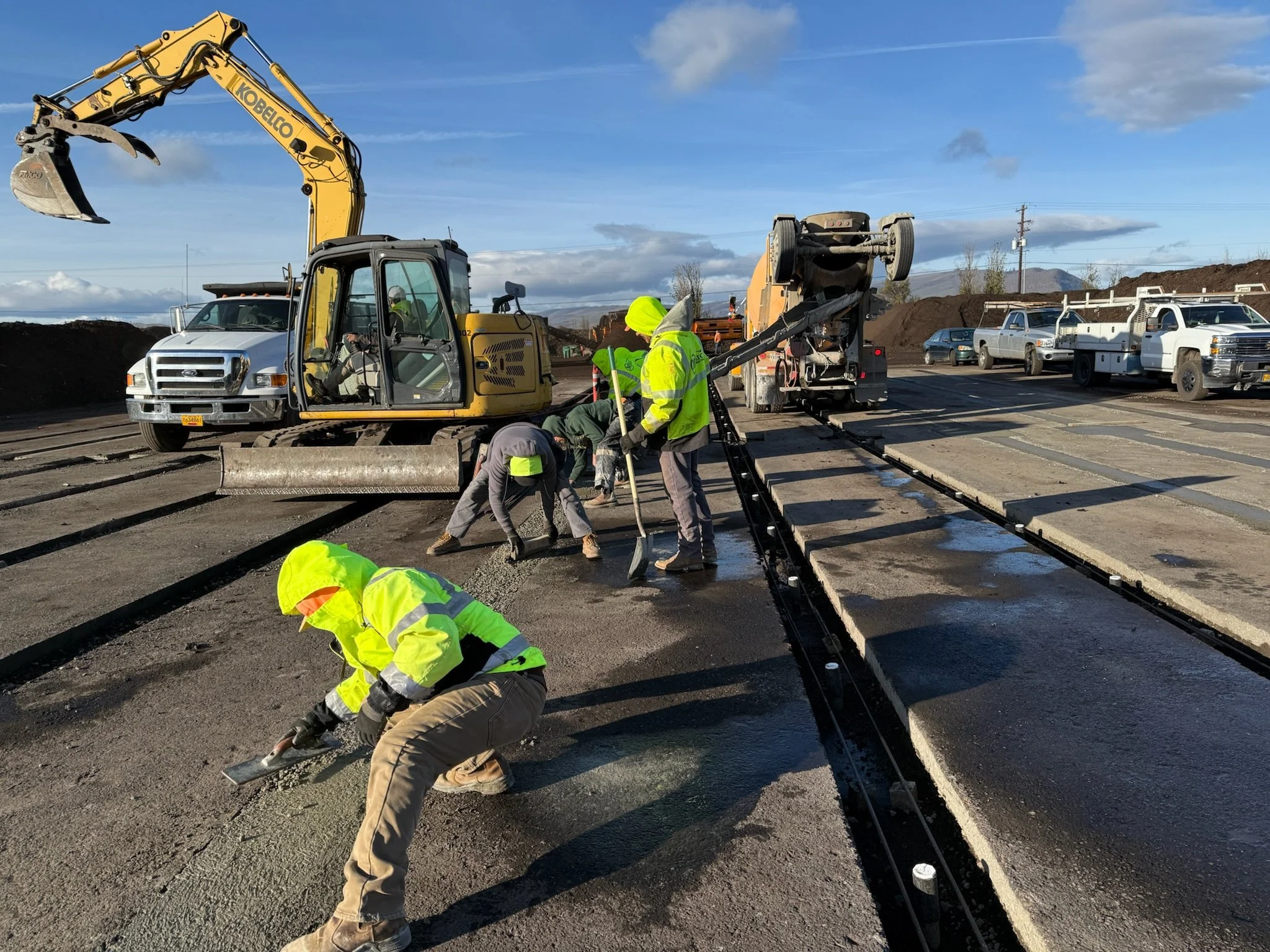
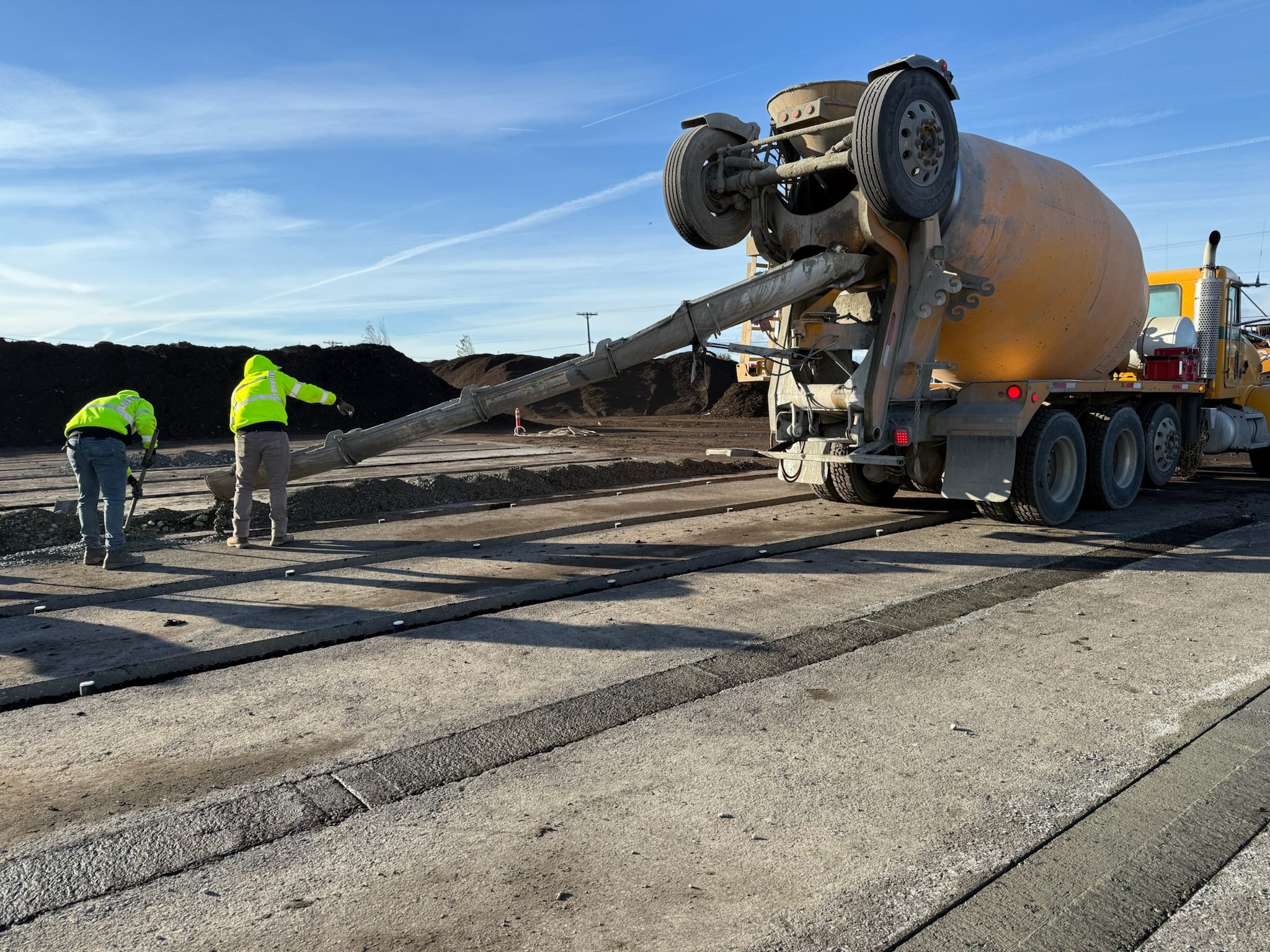
Pouring concrete.
Built With Trusted, Long-Term Partners
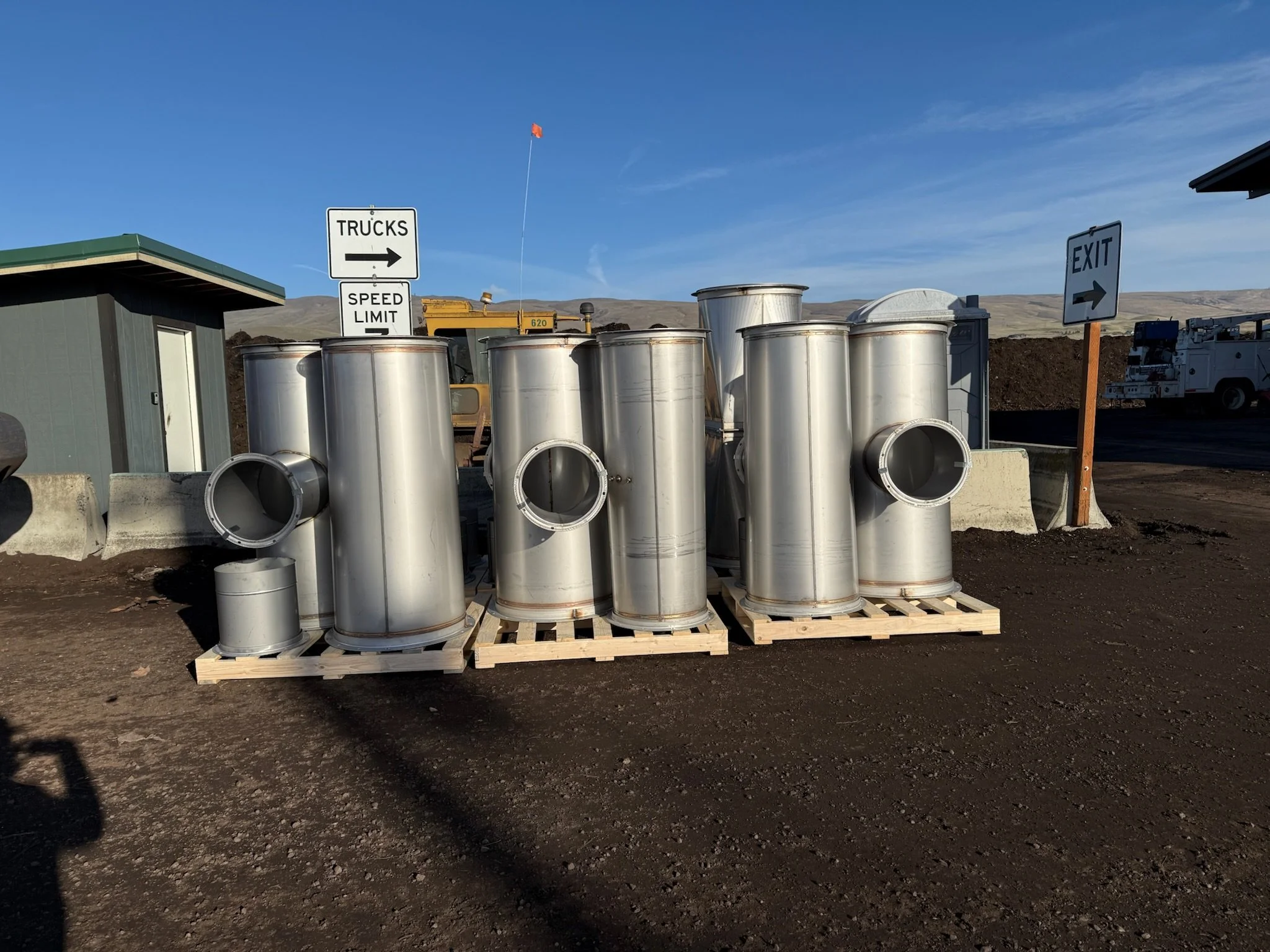
We didn’t do this alone. This project reflects over 15 years of collaboration with Green Mountain Technologies, our longtime technology partner based in Bainbridge Island, WA. The concrete work was led by Mission Construction, our long time trusted construction partners. For aeration power, we installed industrial-scale equipment from Twin City Fan, known for building the kind of high-capacity blowers that keep systems like this running reliably for decades. Another special shout out goes to Crestline Construction, located in The Dalles, OR who helped with a lot of this project as well.
We are proud to have built this with people who understand and appreciate compost as deeply as we do.
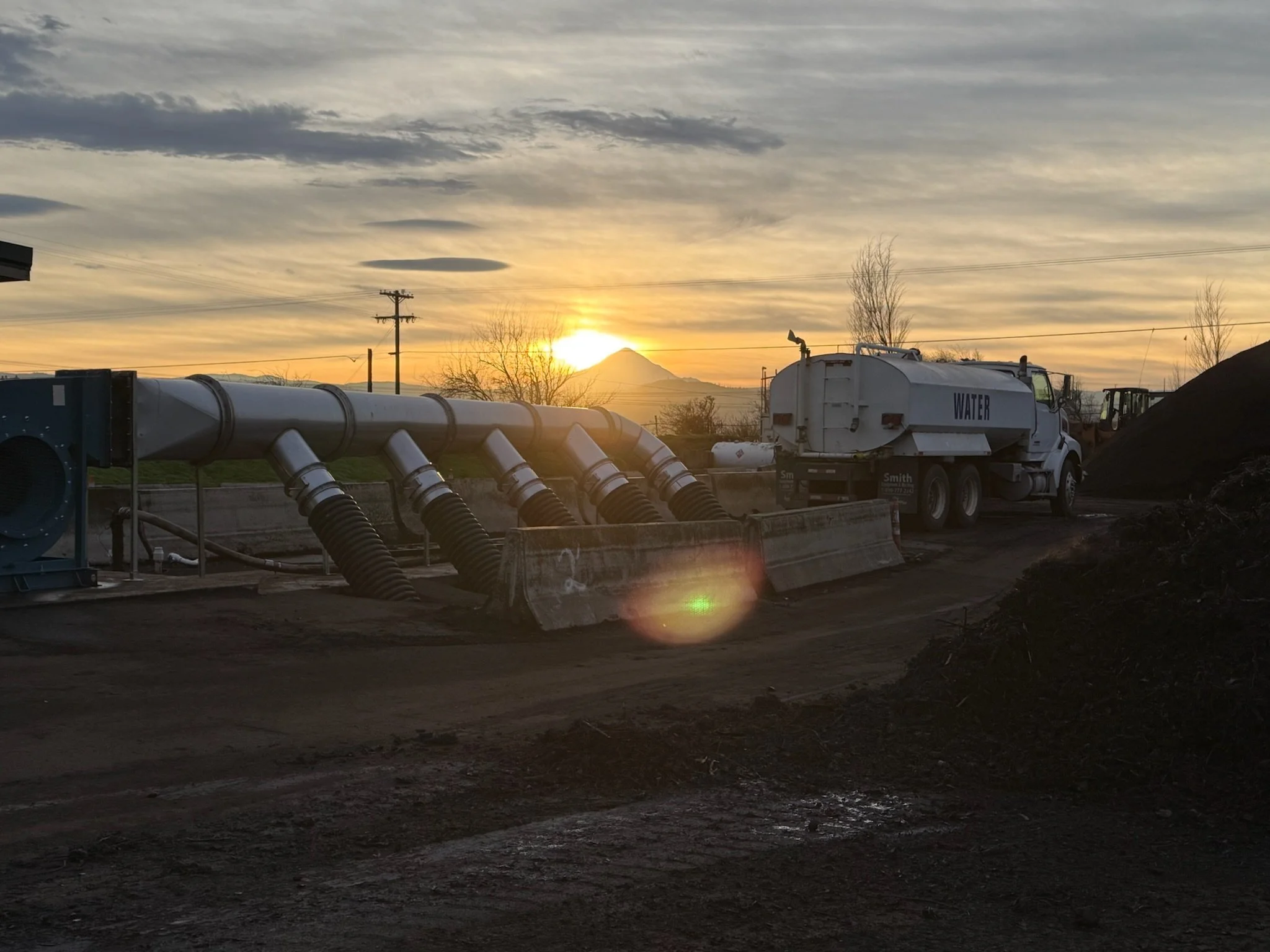
The aeration nozzles doing their thing.
What Changed in the Ground (Literally)
Beneath the surface, the transformation is dramatic.
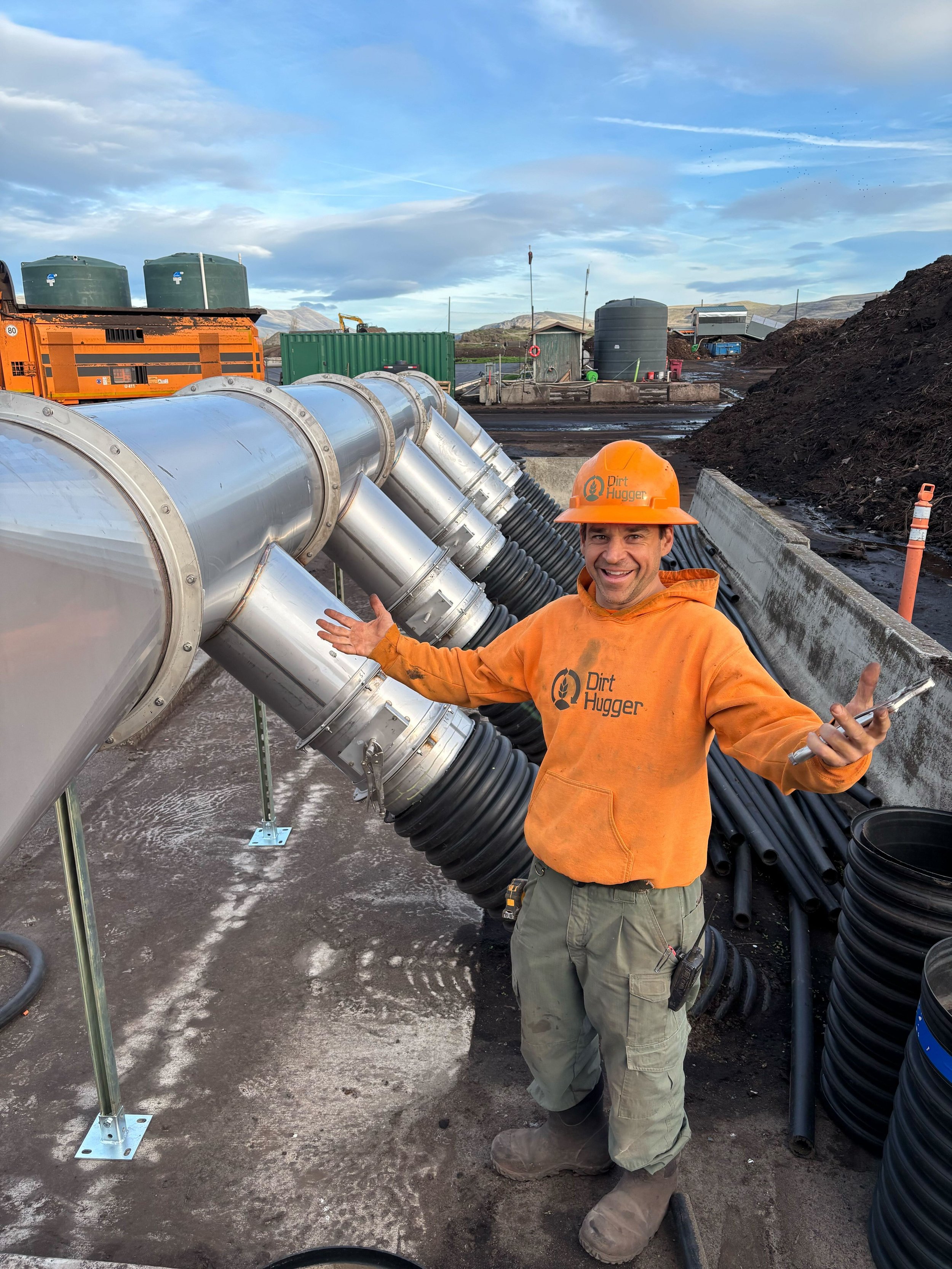
Across over an acre of our site, we installed a positively aerated compost curing pad. Two feet below the pad, there’s now 2 miles of an engineered network of pipes, running north to south, connected by manifolds and fed by two 60-horsepower blowers.
The system includes 1,276 aeration nozzles installed at the same height as the poured concrete pad. During the curing phase, the nozzles push oxygen deep into the compost piles, giving us precise control over airflow and temperatures.
Why does that matter? Because compost thrives on oxygen. The easiest way to picture it? The compost is resting on a giant air hockey table, floating on air that keeps it breathing and breaking down faster. One week on this air is worth a month without it. By delivering oxygen further into the process, we accelerate stabilization, improve consistency, and ultimately produce higher-quality compost.
50% More Feedstock with the Same Footprint
Under the guidelines of our air quality permit from the Department of Ecology, this infrastructure allows us to take in 50% more feedstock without expanding our physical footprint.
That means:
Overall throughput capacity increasing from 60,000 tons to 90,000 tons per year
Allowing the production of an additional 25,000 yards of Organic compost.
We now have three and half acres of aerated floor that’s capable of controlling composting temperatures for over 20,000 cubic yards of material at once.
This matters and is important. It means more food scraps, yard debris, and organic waste will be diverted from landfills and turned into compost that rebuilds soil instead of generating methane.
The sweet sound of air.
From Diesel to Electric: Cleaner Air and Lower Costs
Another major win of this particular project? Electrification.
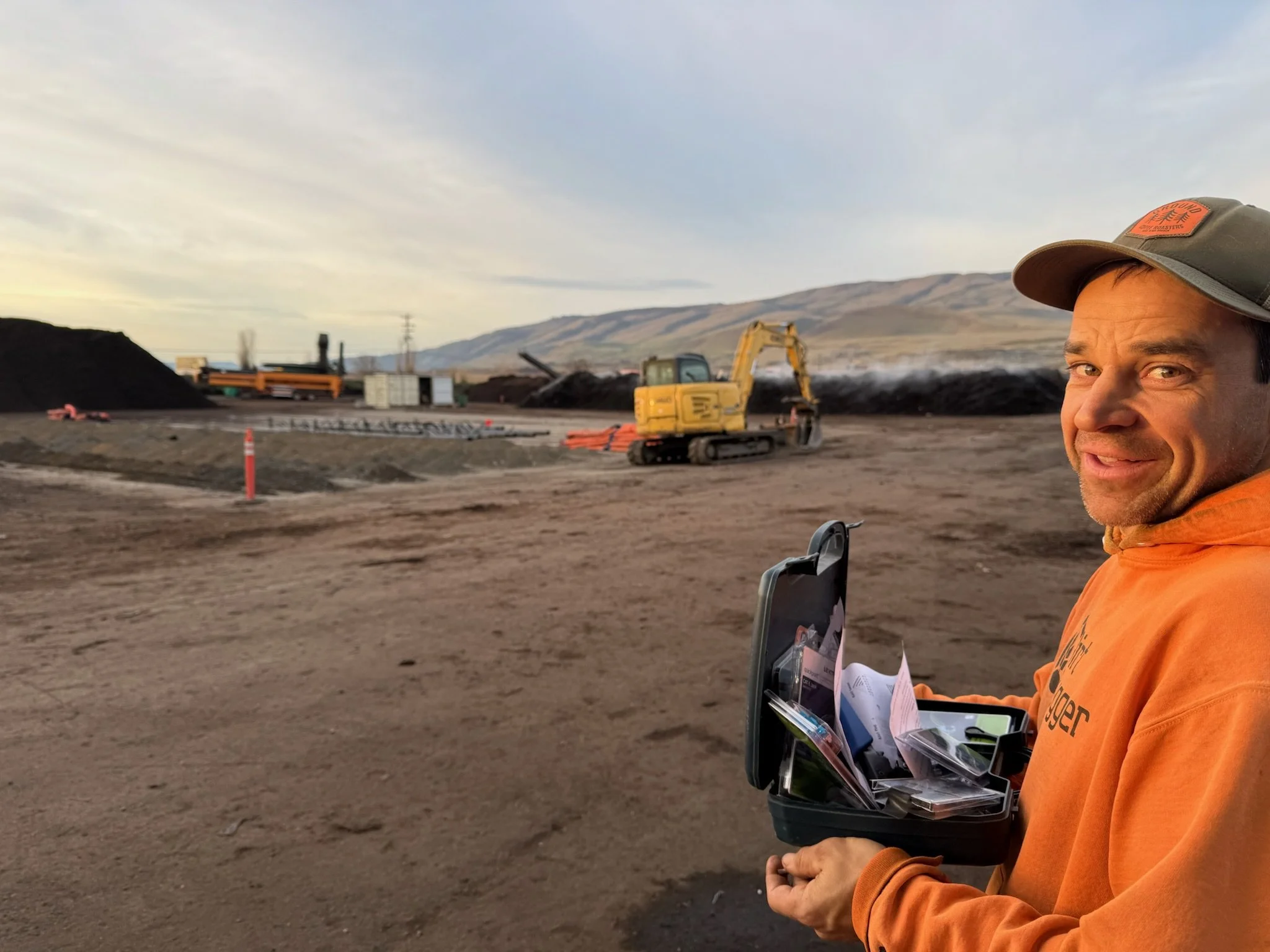
We replaced diesel-powered systems with electric machinery, which are the bright orange units you’ll see on site. We added power grids to support these systems and are making electricity sexy again. This shift alone saves us approximately $4,000 per month in fuel costs, while dramatically reducing on-site emissions (over 10,000 gallons of diesel in 2025 alone!)
Less diesel means:
Cleaner air for our team and neighbors
Lower operating costs
Fewer emissions tied to every ton of compost we process
It’s a practical example of how sustainability and smart economics can go hand in hand.
Carbon-Negative Growth
We call this project Expanding Capacity and Reducing Emissions, and the name says it all. It’s proof that composting infrastructure can scale responsibly; not by cutting corners, but by investing in better systems.
This upgrade supports carbon-negative growth: processing more organic material, preventing landfill emissions, reducing fossil fuel use, and producing compost that stores carbon back in the soil. This system represents years of planning, collaboration, and belief in what composting can be when it’s done right. We’re proud of the progress and even more excited about what it allows us to do next.
More capacity. Better compost. Cleaner air. That’s the future we’re building at Dirt Hugger. Thanks for following along!